
Renting a Car in Morocco: 10 Essential Tips Before Your First Road Trip
A practical checklist for first-time visitors: choosing the right car, licence rules, deposits and insurance, airport handovers and real Moroccan driving conditions.
Guest post by the ASTERIA Car Luxury editorial team, a car-rental company based in Casablanca. Written in collaboration with Moroccanly.
A road trip in Morocco can take you from Atlantic cities to mountain villages, coastal viewpoints and palm-filled valleys. A rental car gives you flexibility, but that freedom starts well before you turn the key. The right vehicle, a clear contract and a realistic route matter more than a bargain headline price.
For inspiration, Moroccanly’s 10-day cities, desert and coast itinerary shows how varied a trip can become. For a self-drive journey, however, add time for breaks, unpredictable traffic and slower mountain sections. These ten practical checks will help you book with confidence and spend more time enjoying the country.
1. Design the route before choosing the car
Start with the places where you will actually sleep, not a wish list of every destination on the map. A Casablanca–Rabat–Tangier itinerary and a Marrakech–Atlas–desert circuit have different driving demands. Allow time to explore the medinas on foot, pause at viewpoints and avoid turning each day into a race.
Check whether you are returning to your arrival city or leaving from another airport. A one-way return can be convenient, but it may require an advance agreement and a collection charge. For a short city break, a taxi, train or private transfer may sometimes be more practical than keeping a car parked. Our guide to travelling between cities in Morocco compares the options.
2. Match the vehicle to the people, bags and roads
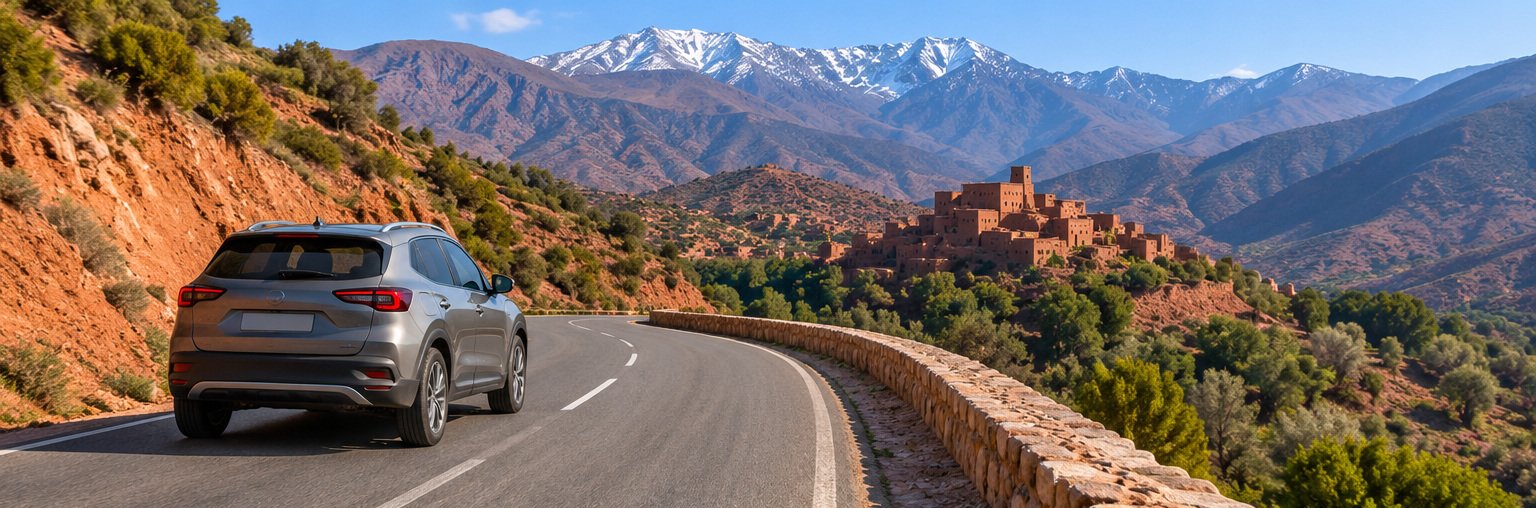
A compact automatic is often sufficient for urban travel and main highways, while an SUV can offer extra luggage space and comfort on longer journeys. A family with several suitcases may need a minivan; a couple travelling light may prefer an economical hatchback. Count real seats, child seats and suitcases before selecting a model.
The Moroccan National Tourist Office notes that traffic keeps to the right and that manual transmissions are common. If you only drive automatics, request that transmission explicitly. Compare vehicle categories rather than assuming a photograph or model page guarantees availability for your dates. You can browse economy, automatic, SUV and premium options as a starting point.
3. Check licence, age and driver eligibility early
Ask the rental company which licence it accepts, how much driving experience is required and whether the selected vehicle has a higher minimum age. These conditions can differ according to the vehicle, insurance policy and the licence-issuing country. Carry the original licence, an accepted identity document and the payment card required by the supplier.
Some nationalities need additional paperwork: for example, UK government travel advice tells UK licence holders to carry the 1968 International Driving Permit alongside their UK licence. Check the current rules for your own licence before departure; do not assume one rule applies to all visitors. Confirm every additional driver in advance.
4. Ask for the total price, not just the daily rate
A meaningful quote specifies the vehicle or category, start and end times, total rental period, currency and any applicable taxes. Ask about airport delivery, return to a different city, extra drivers, child seats and other optional services. Make sure you know whether the fuel policy is same-to-same or full-to-full.
Mileage deserves special attention on a road trip. Unlimited kilometres should only be assumed if the provider confirms them in writing; otherwise, check the daily allowance and the charge for exceeding it. A clear written quotation is easier to compare than several offers that quote a low daily price but different inclusions. If you are still deciding where to book, read our comparison of booking a rental car online vs with a local agency.
5. Arrange the airport handover before you land
“Airport pickup” can mean a staffed desk, a representative meeting you in arrivals or a handover in a car park. Ask for the exact meeting point, contact number, vehicle delivery procedure and what happens if your flight is delayed. Share the correct flight number, landing time and terminal information if requested.
At Casablanca Mohammed V Airport (CMN), a pre-arranged meeting can make the first day much smoother. Confirm whether the agent will wait after baggage collection and whether an out-of-hours or delivery fee applies. For the return, obtain the agreed parking area and meeting instructions in advance instead of improvising on departure morning. Spending your first night in the city? See where to stay in Casablanca.
6. Understand the difference between deposit and excess
A security deposit and an insurance excess are not the same thing. The deposit is security for amounts that may become payable under the contract; an excess is the part of an insured claim that may remain chargeable when the contract and insurance conditions apply. Ask for both figures, in the rental currency, before accepting the booking.
A card pre-authorisation generally reserves part of the card’s available limit rather than charging that sum as an ordinary payment. After the return checks, the rental company can request release of the unused hold, but the card issuer controls when funds become available again. If an offer says “no deposit”, ask exactly what has changed in the price and coverage.
7. Read what the insurance actually covers
Terms such as “comprehensive cover” and “full insurance” can conceal very different conditions. Request the relevant excess, main exclusions and accident-reporting procedure. Find out how the policy treats tyres, glass, keys, towing, unauthorised drivers or prohibited off-road travel, and ask whether optional protection is included or separately priced.
Never assume that a paved-road rental authorises desert tracks or rocky trails. If your itinerary includes unsealed roads, such as the pistes around Merzouga, discuss it with the supplier before booking. For an example of the level of detail worth checking, review ASTERIA’s published insurance explanations. The signed agreement and policy applicable to the booked vehicle remain decisive.
8. Photograph the vehicle before leaving
Take a few minutes at handover to inspect the bodywork, bumpers, wheels, tyres, windows and interior. Photograph or film existing damage with the representative present; check that it is recorded on the inspection form. Note the fuel level, odometer reading, number of keys and any supplied safety equipment.
Test the lights, air conditioning and navigation before driving away. Keep your rental agreement and emergency contact details accessible, not buried in a suitcase. If anything differs from the paperwork, ask for the record to be corrected before signing. Repeat the condition check at return and retain your photos and receipt.
9. Plan for real Moroccan driving conditions
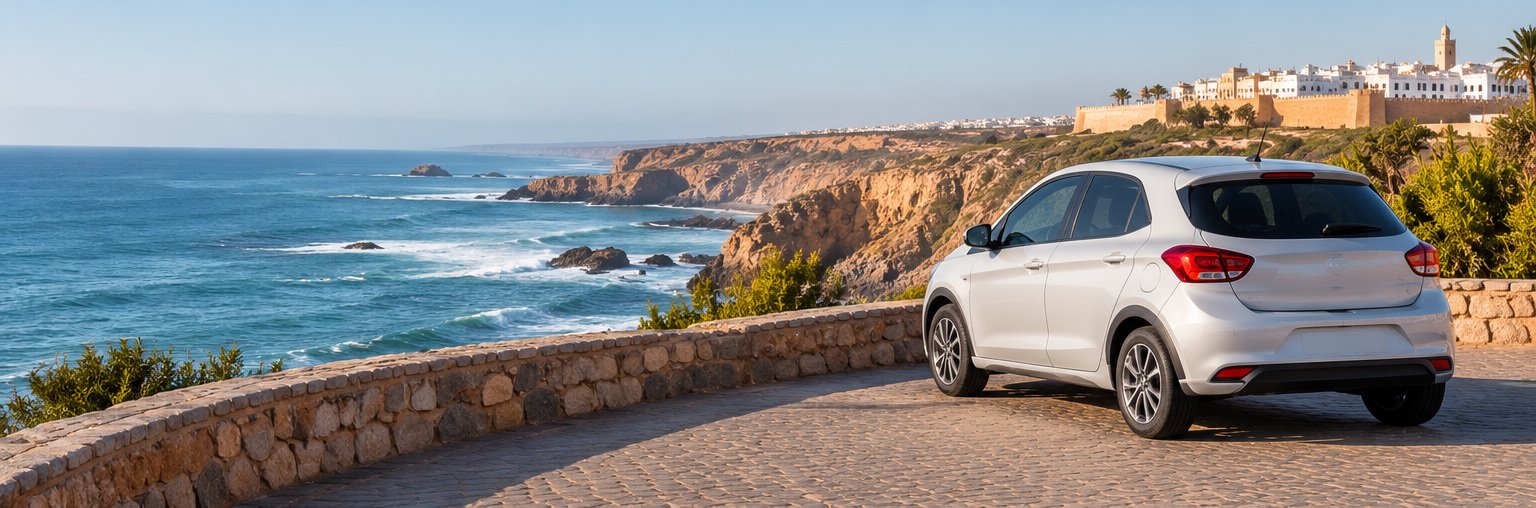
Morocco has major intercity highways as well as narrow local streets and mountain roads. Drive on the right, follow posted speed limits and take extra care near pedestrians, scooters and rural crossings. The tourist office notes that signs are generally in Arabic and French. Do not rely on estimated journey times without allowing for traffic, weather and breaks. Our guide to driving in Morocco covers roads, police checks and local habits.
Avoid unfamiliar mountain or rural roads after dark when possible; limited lighting, animals and changing conditions can increase risk. On motorways, check your toll arrangements and keep a means of payment available. Morocco’s motorway operator ADM provides traffic and assistance information and lists 5050 as its motorway customer-assistance number.
10. Make the return as deliberate as the pickup
The final hour can be the most rushed part of a rental. Confirm the return address, time and contact person the day before; leave room for traffic, refuelling and the vehicle inspection. Check your fuel agreement and make sure you have not left passports, chargers or small items in the cabin.
At return, review the condition record and any outstanding tolls or charges, and ask for written acknowledgement of the handover. If you need a longer rental or a different drop-off point, arrange it before the original deadline rather than assuming an informal extension is accepted.
A good road trip begins with a clear agreement
The best Morocco rental is not necessarily the most expensive or the cheapest: it is the one that matches your itinerary, budget and level of driving confidence, with no surprises about paperwork, insurance or return conditions. A little preparation lets you focus on the people, food and landscapes that make the journey memorable.
If you are comparing vehicle types or planning an airport handover in Casablanca, the ASTERIA Car Luxury vehicle catalogue can help you frame the right questions before requesting a quote. Availability and final terms should always be confirmed for your exact dates.
Official references for travellers
- Moroccan National Tourist Office — Transport
- UK FCDO — Road travel and licence advice
- Autoroutes du Maroc — Motorway support 5050
About the contributor
ASTERIA Car Luxury is a Casablanca-based mobility and car-rental company serving travellers and businesses in Morocco, with self-drive categories ranging from economy vehicles to SUVs and premium models, as well as pre-arranged airport deliveries and chauffeur services. Website: asteriacarluxury.com.
Planning the rest of the trip? Read the best time to visit Morocco, the best day trips from Marrakech and our Dades and Todra gorges guide, or build your route with the free Moroccanly trip planner.
Images: ASTERIA Car Luxury.
Questions and tips
Been there or planning a trip? Ask a question or share your own tip below.